Transcranial Magnetic Stimulation (TMS) is a non-invasive brain treatment most widely known for helping people with depression, especially when medications have not worked well or have caused unwanted side effects. It works by gently stimulating specific brain circuits linked to mood and emotional control. Despite the complicated name, the idea behind TMS is simple: use magnetic energy to help regulate parts of the brain that are not working properly.
Transcranial Magnetic Stimulation (TMS)
A modern, non-invasive, drug-free treatment that uses gentle magnetic pulses to stimulate brain areas involved in mood, motivation, and emotional regulation.
What Is TMS Exactly?
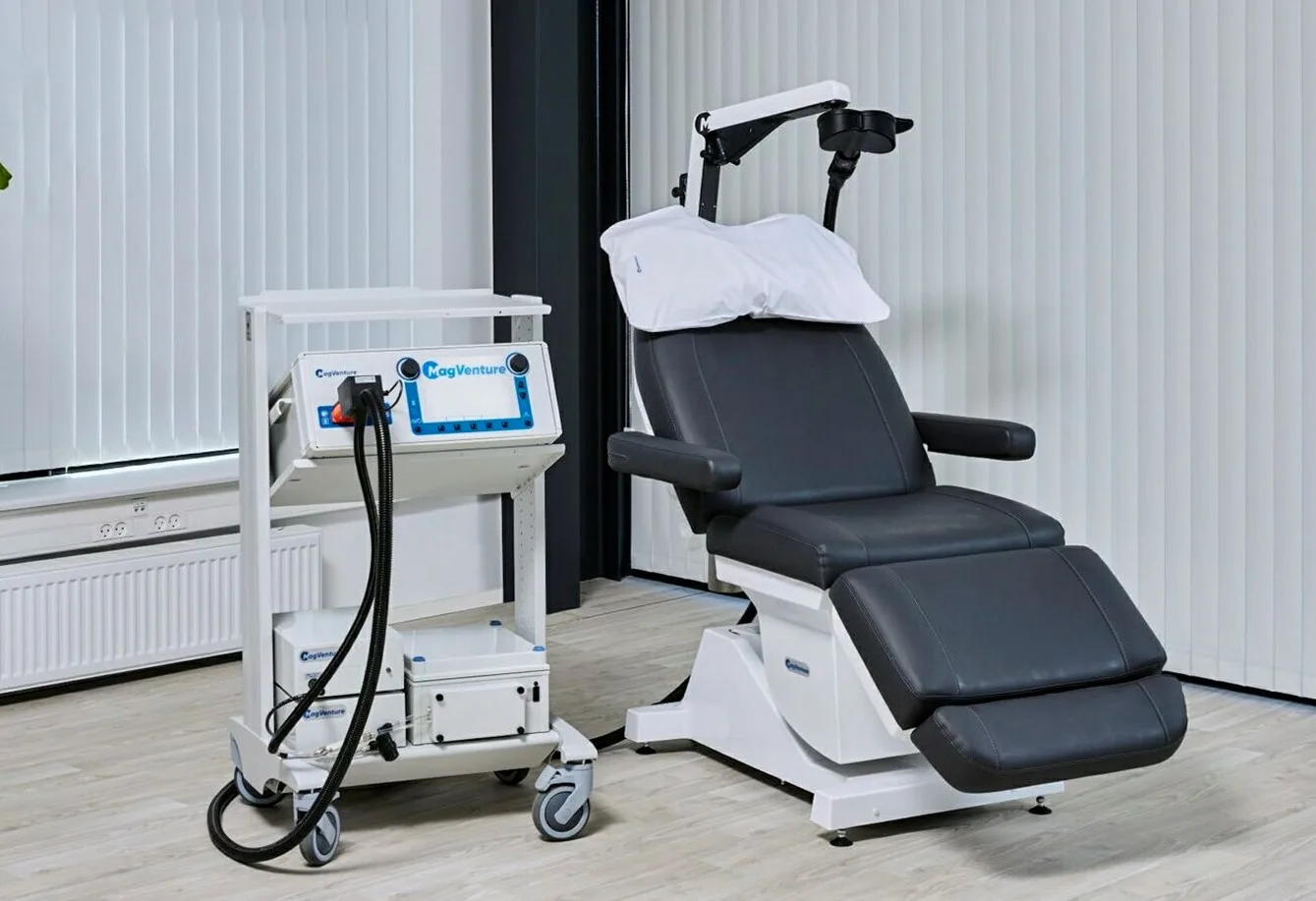
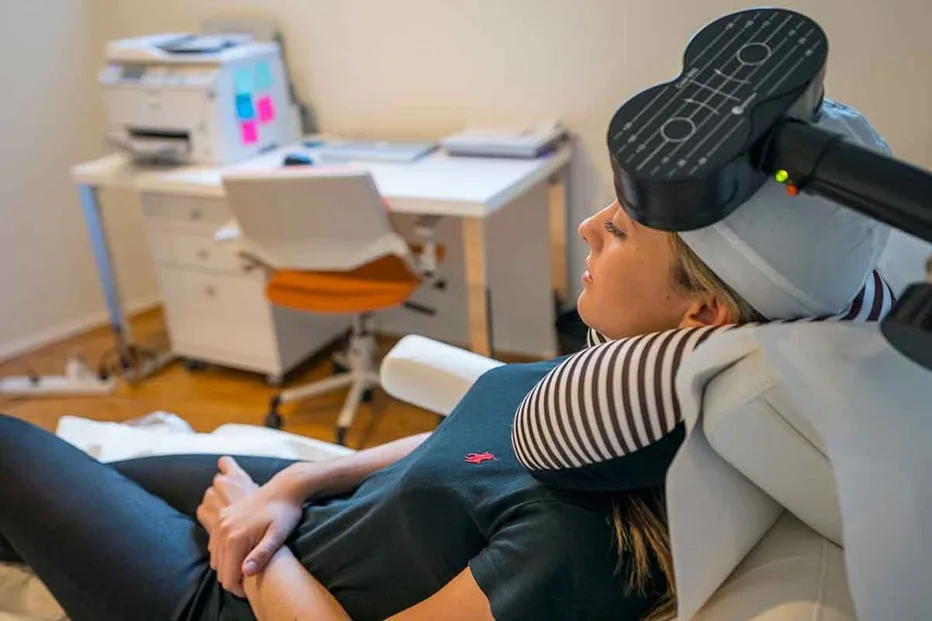
TMS is a medical treatment that uses repeated magnetic pulses to influence brain activity. These pulses are delivered through a coil placed on the scalp and target specific areas of the brain involved in mood regulation, motivation, decision-making, and emotional control. Despite the name sounding complex, the idea is simple: TMS helps regulate brain circuits that are not functioning properly.
How Does TMS Work?
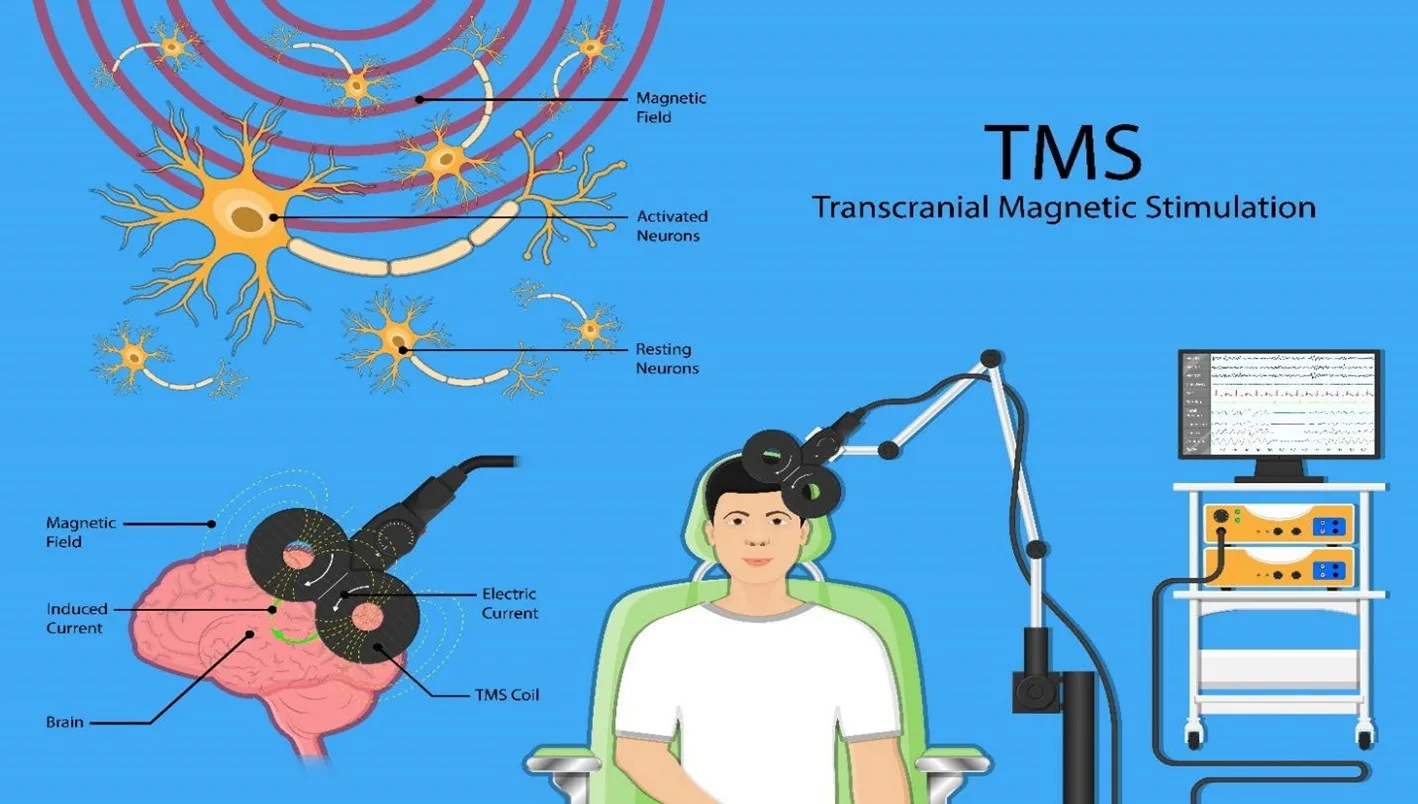
TMS is based on the same physics principle used in MRI technology. During treatment, a magnetic coil is placed on the head and produces brief magnetic pulses. These pulses pass painlessly through the skull and create tiny electrical currents in the brain. Over time, repeated stimulation may help strengthen weak brain circuits, improve communication between brain regions, and reset abnormal activity patterns linked to depression and related disorders.
01
Magnetic coil placed on scalp
02
Gentle magnetic pulses delivered
03
Pulses pass through skull painlessly
04
Tiny electrical currents activate brain cells
05
Weak brain circuits may become stronger
06
Mood-related networks may improve over time
If medication has not worked well, TMS may offer a different path forward.
What Happens During a TMS Session
A typical TMS session is simple, structured, and performed while you are awake and alert.
Why Consider TMS?
TMS is often recommended when medications have not worked, when medications cause intolerable side effects, or when a person prefers a non-drug treatment option. Unlike medication, TMS directly targets mood-related brain circuits and does not circulate through the whole body.
Who May Benefit From TMS?
TMS is most widely used for Major Depressive Disorder, especially when depression has not improved enough with standard treatment. Depending on clinical evaluation, it may also be considered for other psychiatric conditions.
How Effective Is TMS?
Clinical studies show that many people with treatment-resistant depression experience meaningful improvement with TMS. Some patients notice better mood, stronger motivation, improved energy, clearer thinking, and better sleep. Improvement often begins after the first 2 to 3 weeks of treatment.
What Does TMS Feel Like?
Most people describe TMS as a tapping or knocking sensation on the head. Mild scalp discomfort can happen during early sessions, but this usually improves as the scalp adjusts. You remain awake throughout the treatment.
How Long Do Results Last?
Many patients stay well for months or even years after treatment. Some people benefit from maintenance sessions every few weeks or months, while others may return for booster sessions if symptoms come back. TMS can be repeated safely when clinically appropriate.
Is TMS Safe?
TMS is considered very safe when done under medical supervision. The most common side effects are usually mild and may include scalp discomfort, mild headache, or temporary facial muscle twitching during treatment. These effects often lessen over time.
A seizure is a rare but serious risk, which is why proper screening is essential before treatment begins.
TMS does not cause memory loss, personality changes, or brain damage.
Who May Not Be Suitable for TMS?
TMS may not be suitable for people who have metal implants in the head, brain stimulators or deep brain electrodes, or certain types of epilepsy. A proper medical consultation is always needed to determine whether TMS is appropriate.
TMS vs. ECT
| TMS | ECT |
|---|---|
| No anesthesia | Requires anesthesia |
| Awake during treatment | Patient asleep |
| No memory loss | Possible memory side effects |
| Mild magnetic stimulation | Electrical seizure induced |
| Outpatient treatment | Often hospital-based |
Both can be effective, but TMS is generally gentler and is associated with fewer cognitive side effects.
Common Questions
Does TMS hurt?
Most people feel only a mild tapping or knocking sensation, especially during the first few sessions.
Will TMS change who I am?
No. TMS is designed to help restore emotional balance, not change your personality.
Can I take medication during TMS?
Yes, in many cases TMS is combined with medication and therapy depending on the treatment plan.
Can I drive after my session?
Yes, most patients return to normal daily activities immediately after treatment.
Why Choose BMMC for TMS Care